
Rosk
Information Architecture from Zero
Defining navigation for a new hospitality intérim platform during strategic company pivot
January 2025: Brigad announces Rosk—leveraging 10 years of hospitality expertise to launch a comprehensive intérim platform. The strategic vision was ambitious: three pillars (Work, Explore, Shine) serving both professionals and establishments, transforming how the industry approaches temporary staffing.
The challenge? Translating this visionary manifesto into navigation architecture that users would actually understand and use.
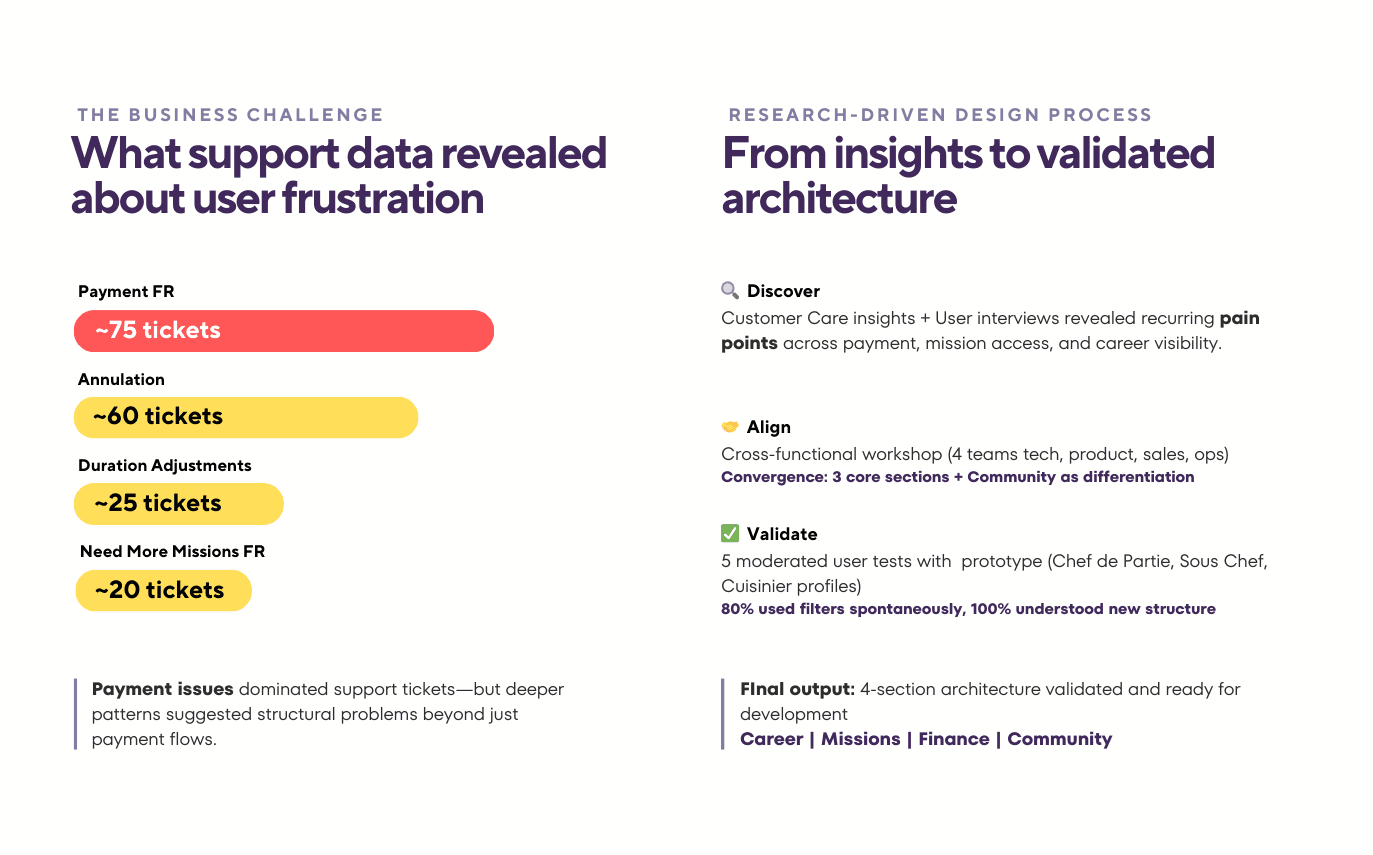
Meanwhile, our support data revealed underlying tensions: payment issues dominated tickets, plus hundreds saying "I need more missions"—signals that informed our research approach.
My mission: Define the information architecture that would bring Rosk's manifesto to life, with zero existing data about how intérim professionals interact with platforms.
My approach
Step 1: Cross-functional discovery workshop
I facilitated a session with stakeholders from tech, product, design, customer care, and market operations. Four groups, completely different approaches, but clear patterns emerged: everyone aligned on 3 core sections, plus community features consistently surfacing as a differentiation.
Step 2: Strategic hypothesis building
Based on Rosk's manifesto and Brigad's learnings, I developed 7 testable hypotheses. The key questions: How do intérim professionals want to discover work differently from freelancers? Should the 3-pillar vision translate directly to navigation? How do we integrate financial transparency—our biggest customer support pain point?
Step 3: User validation
5 structured sessions with hospitality professionals—chefs, waiters, kitchen staff. Think-aloud protocol testing everything from mission discovery to document access, validating how our strategic vision aligned with real user mental models.
Key discoveries
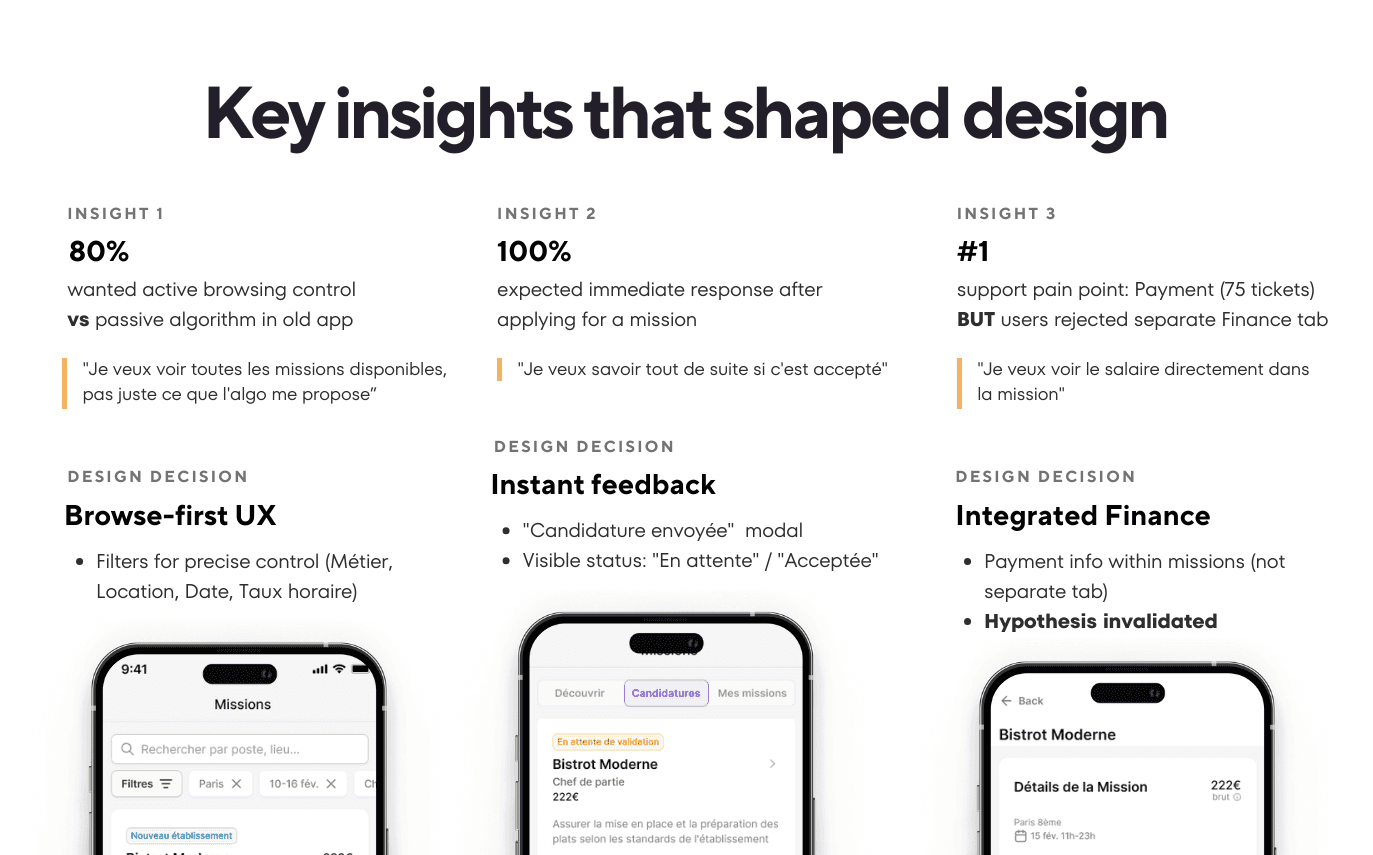
Navigation validated: "C'est trop clair. C'est bien organisé" — 100% of participants understood the 4-section structure immediately.
Direct discovery preferred: "Je veux voir toutes les missions disponibles" —Participants wanted to explore the full marketplace, not just algorithmic suggestions. 80% used filters to refine their search, validating the need for precise control over mission discovery.
Finance hypothesis invalidated: Despite payment being our #1 customer support issue, users wanted financial info integrated within missions, not as a separate section. This insight shaped our architecture proposal.
Community as differentiator: Participants were genuinely excited about peer networking features — validating Rosk's Explore pillar as unique market positioning.
The solution
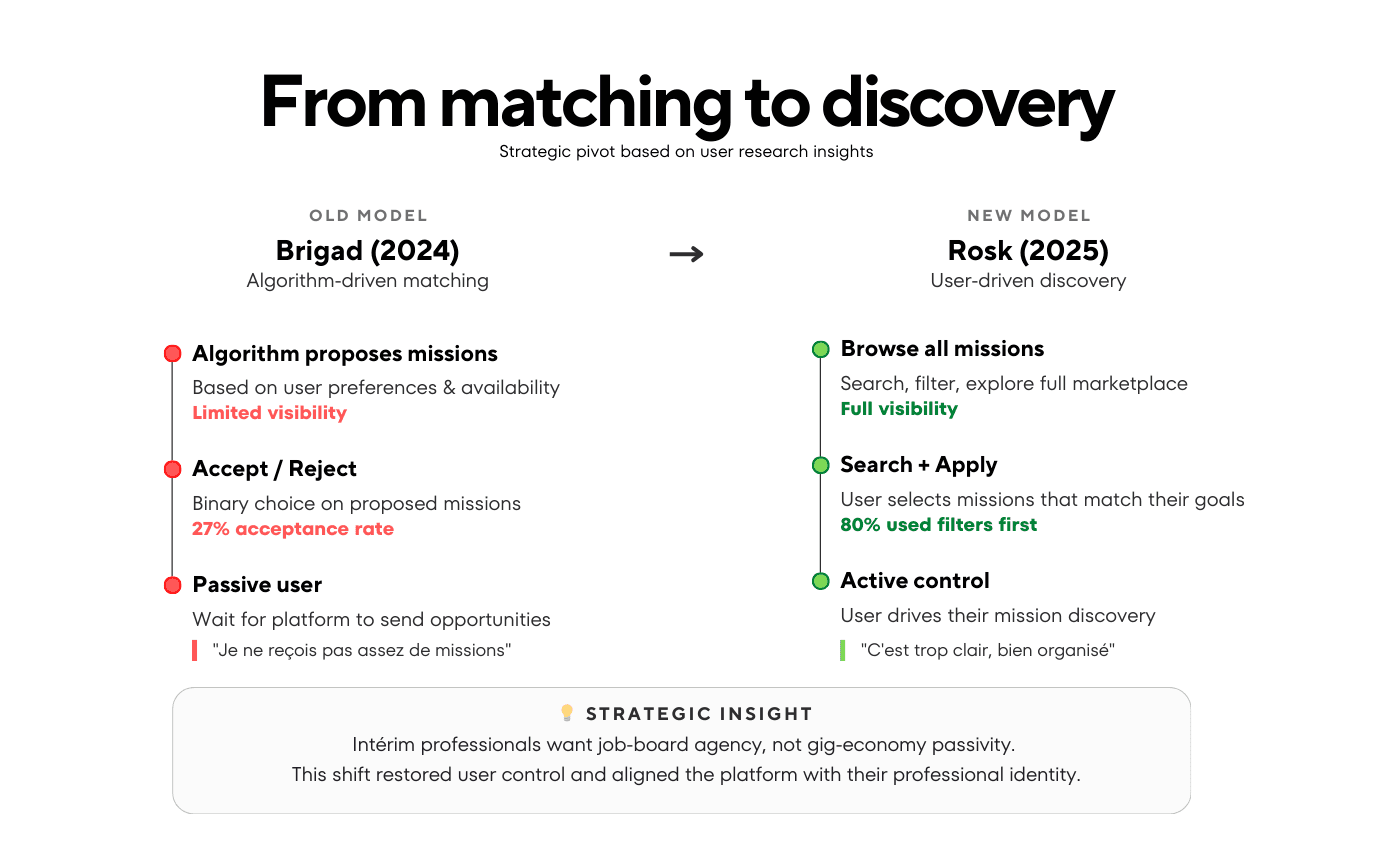
An app organized in 4 tabs — one per pillar of Rosk's mission, plus homepage for quick access.
The homepage becomes the starting point for everything. Work is where professionals discover missions and apply directly — no more waiting for algorithmic matching. Explore creates the community space Rosk envisioned, letting professionals connect and learn from each other. Shine gives people a place to build their professional identity and track their growth.
Finance integration: Instead of its own tab, financial information lives contextually within missions where users actually need it — a decision that came directly from testing.
This navigation framework scales from "missions come to you" to "you find missions" — the kind of systems thinking that prevents major redesigns down the road.
Impact and results
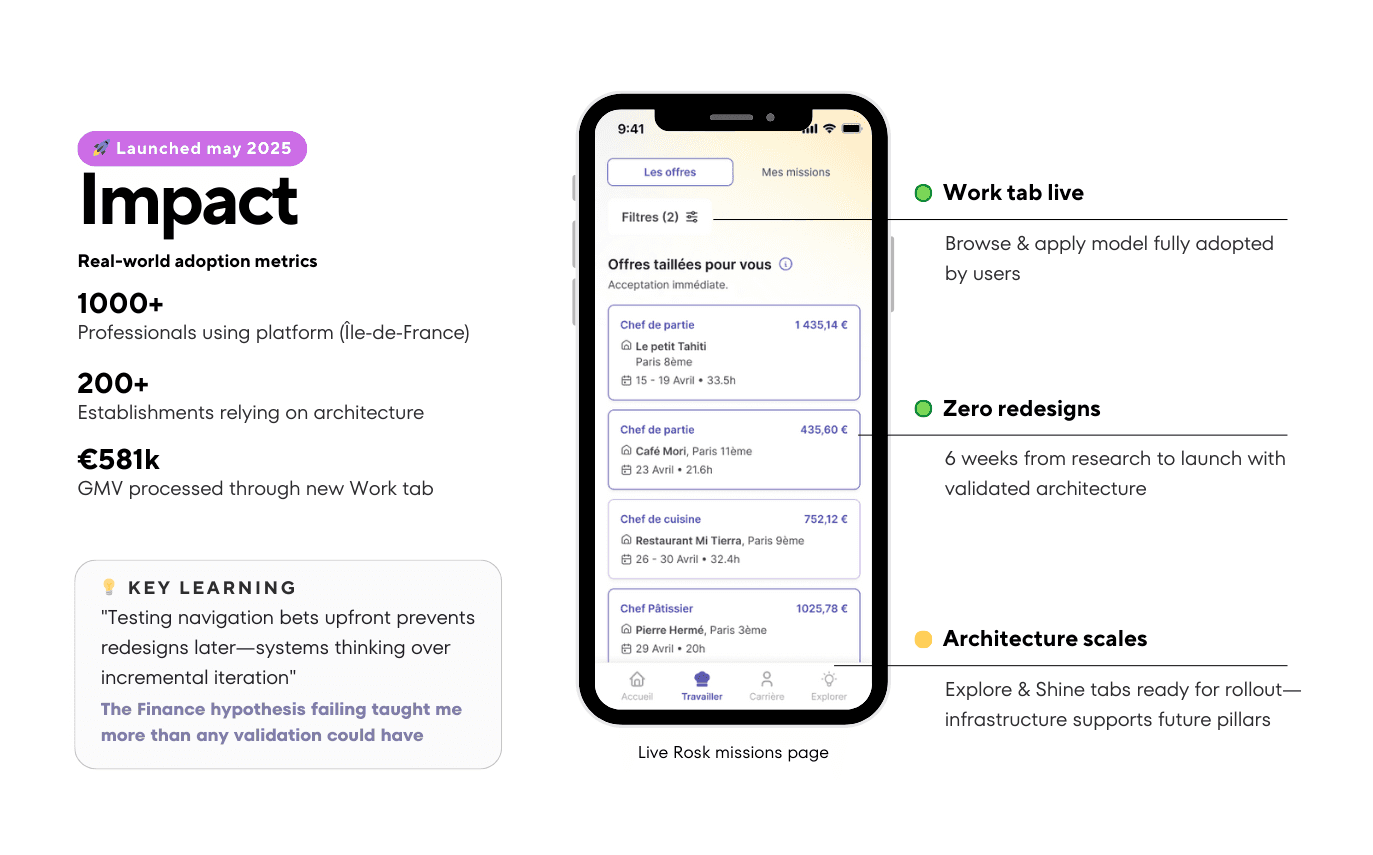
Six weeks to launch-ready architecture: The navigation went live in May 2025 —exactly as designed. No scrambling for major redesigns, no "we should have tested this earlier" moments.
Research wins that mattered: The Finance hypothesis being wrong? That saved the team months of building a section nobody wanted. The direct discovery insight became the entire UX philosophy for the Work pillar. And those community features everyone was uncertain about? Users lit up talking about them — validating Rosk's differentiator.
What's actually working: The navigation serves 1000+ professionals across Île-de-France daily. 200 establishments rely on the foundation. Only the Work pillar is live, but the architecture scales perfectly for Explore and Shine pillars. My browse-and-apply designs are ready for the next release.
The methodology transfer: This research approach became the template for strategic decisions across 5 departments during the pivot. Turns out testing big navigation bets upfront prevents way more problems than iterating on button colors later.