
Brigad
Content Strategy for Healthcare Professionals
From "book shift, get paid, leave" to platform engagement in 10 weeks
Brigad connects freelance healthcare professionals with businesses for short-term missions. By late 2024, the app was purely transactional - professionals found shifts, got paid, and left with zero ongoing engagement.
Our VP Communications came to me with a challenge: What if we could give healthcare workers something valuable beyond just work opportunities? I led the design of Brigad's first content strategy, transforming how 4,300+ healthcare professionals interact with the platform.
•33% conversion rate from discovery to article completion
• 40% of all engagement concentrated on money/career content
• 1,757 healthcare professionals actively consuming content
• 72% article completion rate proving strong content-market fit
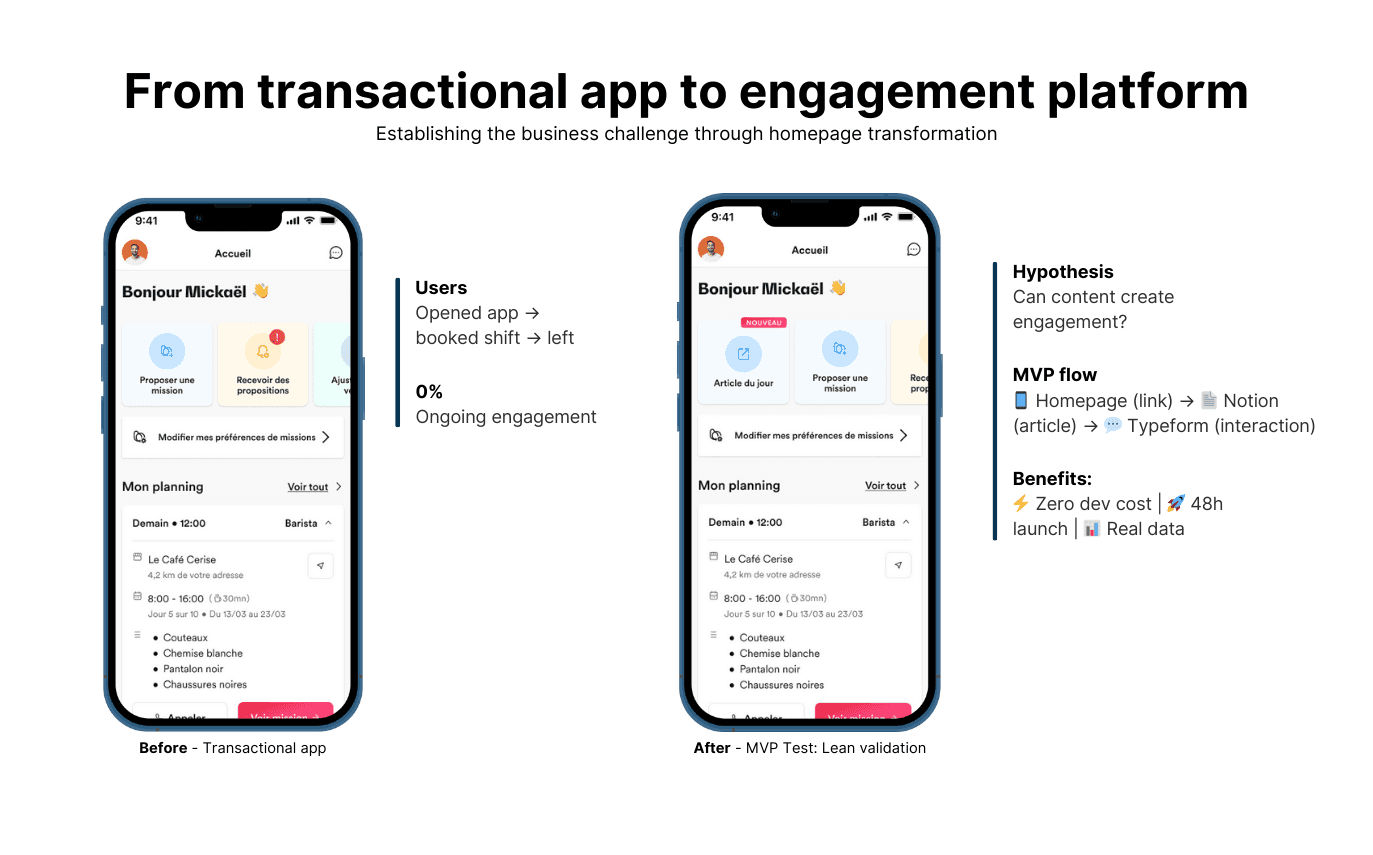
Brigad's healthcare professionals treated us like a vending machine: Open app → book shift → get paid → disappear until next time.
Our VP Communications had a content strategy vision, but we had no idea if people would actually engage with professional content in a work app, what topics would matter, or how they'd want to discover it.
My approach
We had this hypothesis that healthcare professionals wanted professional growth content. But let's be real—we were making educated guesses at best.
Lean validation approach: Instead of jumping into native development, I designed a lightweight MVP test—external articles with a simple promo card on the homepage. Our VP communications handled the actual content while I figured out integration without breaking our core booking flow.
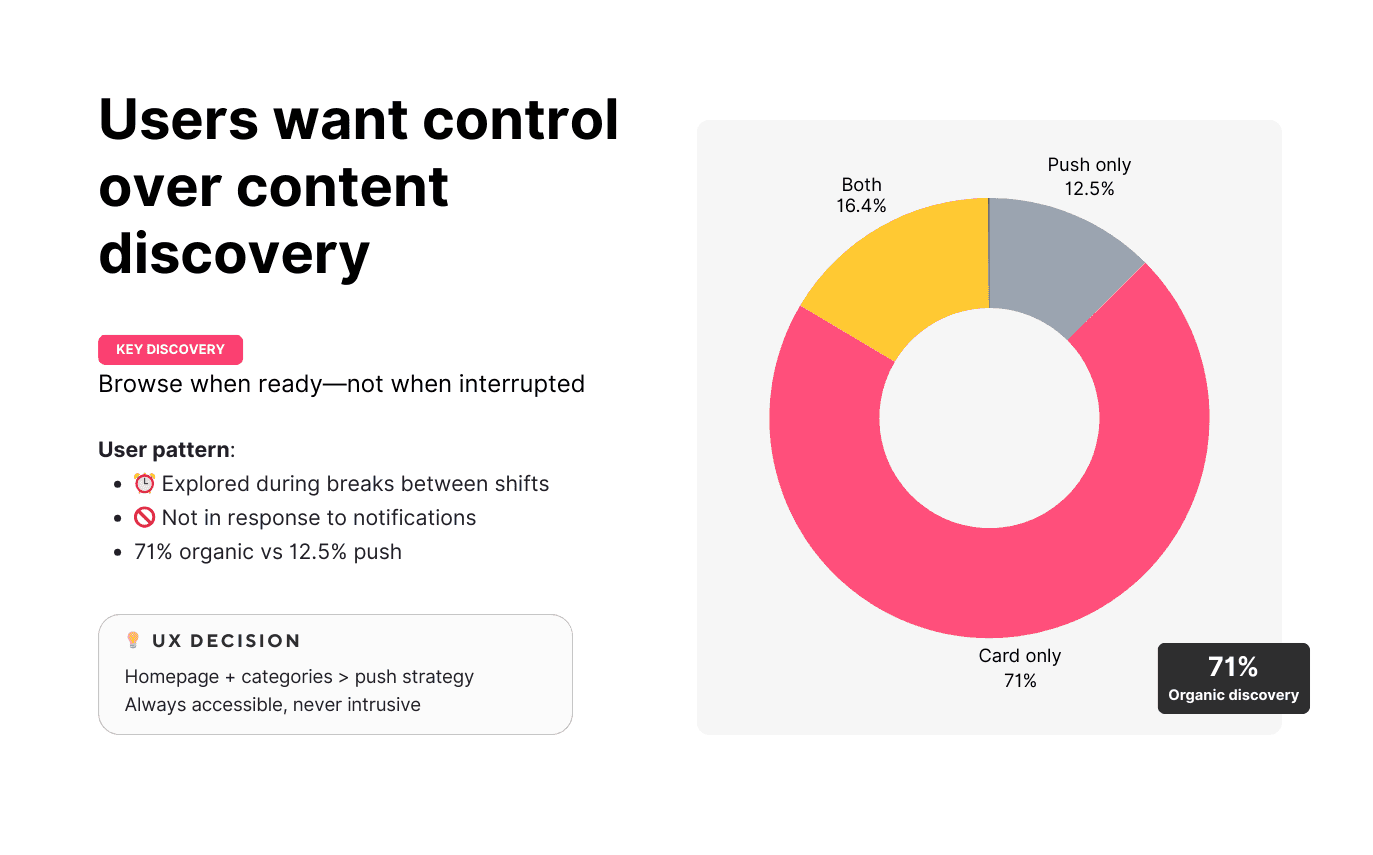
Data-driven iterations: Working with our dev team, we tracked organic discovery vs push notifications. The surprise: 71% preferred finding articles organically. Healthcare workers want to browse content when THEY have time—not when we interrupt them.
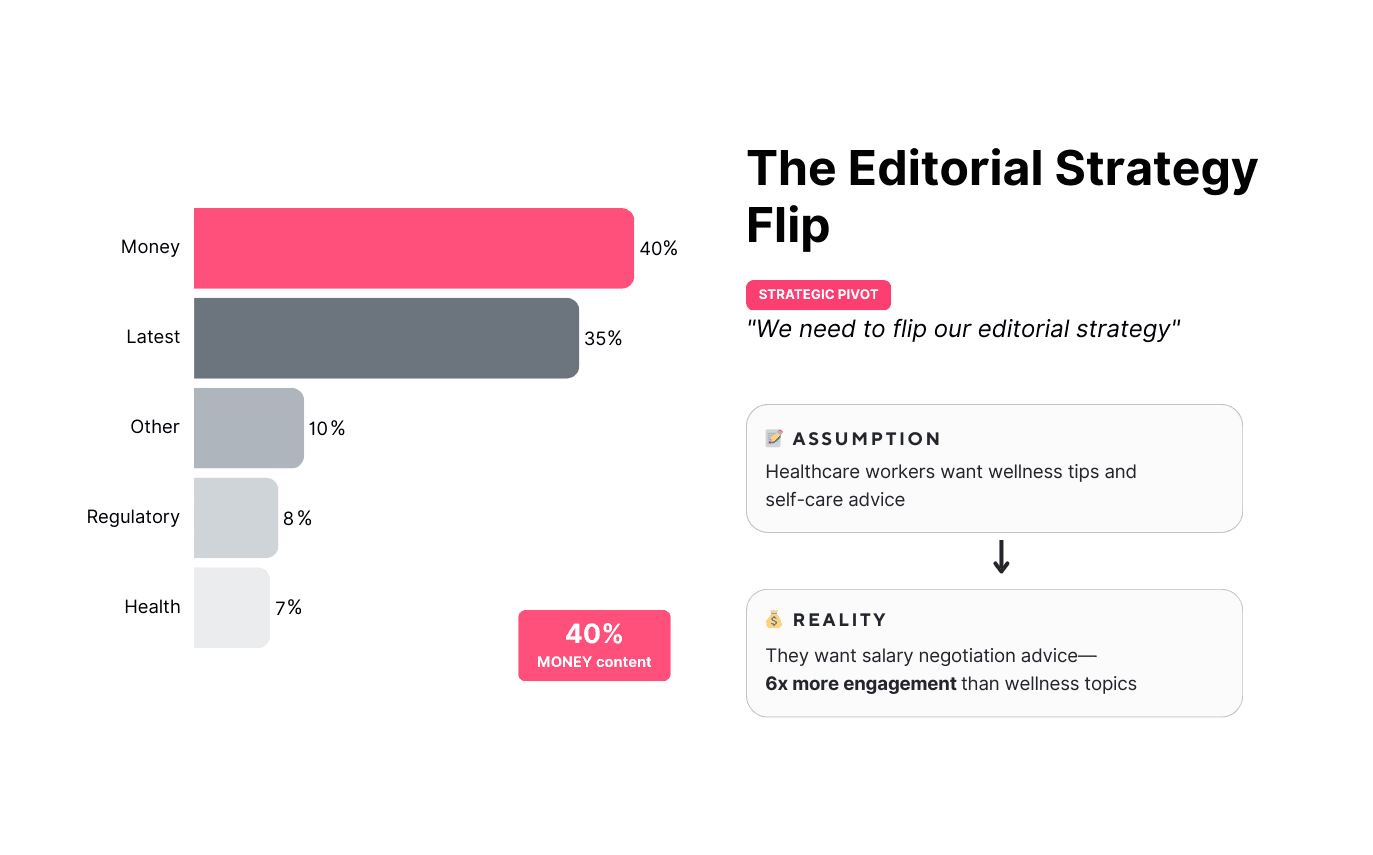
Content-market fit discovery: When I saw 40% of clicks going to money content, I went straight to our VP Communications: "We need to flip our editorial strategy." These professionals don't want wellness tips—they want actionable salary negotiation advice.
The solution
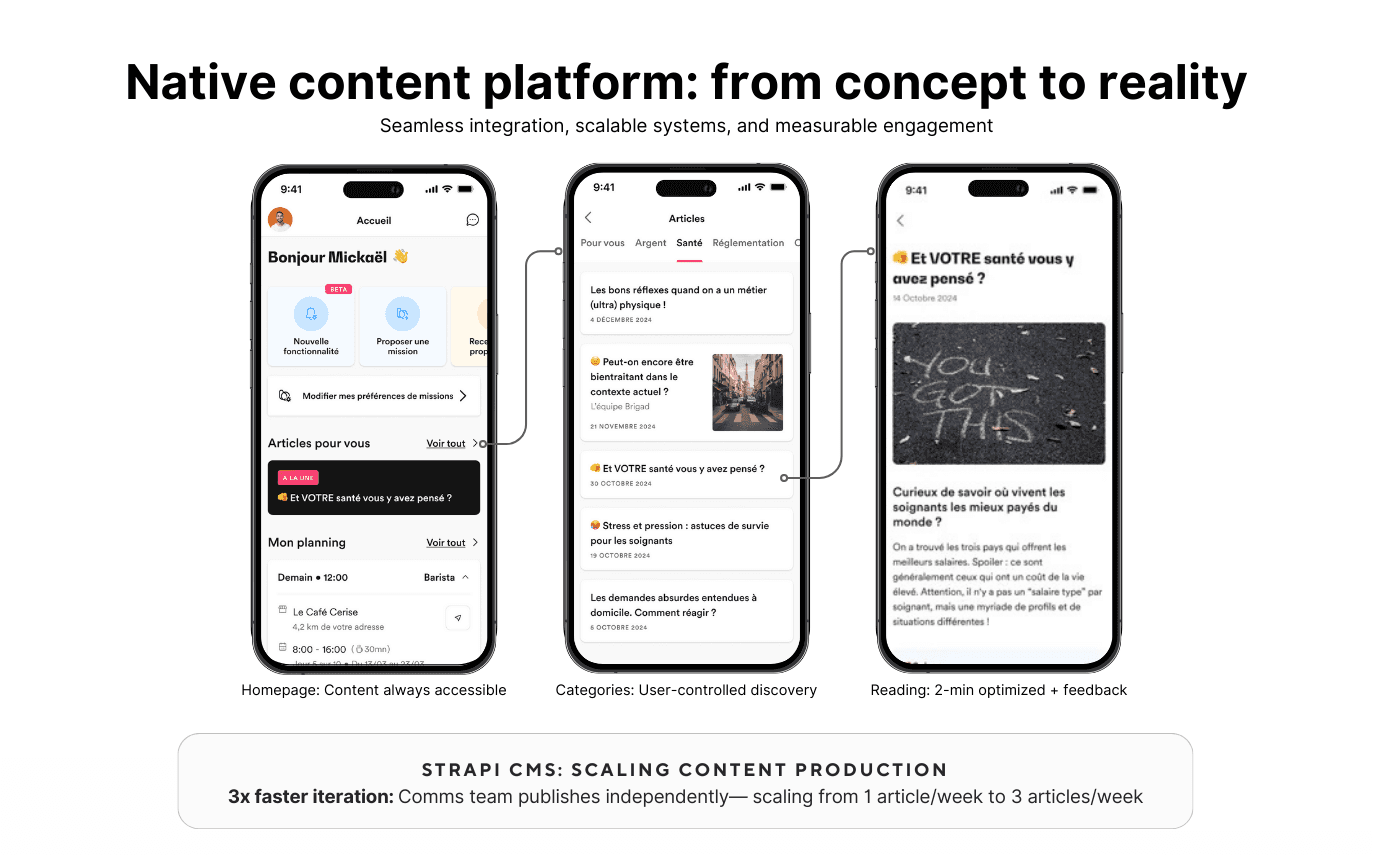
A native content hub that fits seamlessly into healthcare workers' actual usage patterns—quick consumption during breaks, deeper browsing when they have time.
My design process: Working with our Product Manager on information architecture, I tested several content discovery approaches. The winner? Featured content + browseable categories that let users dive deeper when they want to.
Key design decisions:
• Homepage integration without disrupting shift booking
• "À la une" featured system + category navigation for exploration
• Mobile-first article experience optimized for 2-minute reading sessions
• Typeform feedback integration to continuously validate content-market fit
Cross-functional collaboration: I partnered with our engineering team to build a Strapi CMS that let the communications team publish independently. No more designer bottlenecks for content updates—they could iterate on content strategy 3x faster.
Impact and results
Key insights
Organic discovery beats interruption. 71% of users explored beyond featured content when they felt like it. Healthcare workers will actively seek out relevant info, but timing matters—don't interrupt their workflow.
Data trumps assumptions every time. We were completely wrong about wellness content. These professionals want concrete career advice—40% of all engagement went to money/salary topics.
Systems thinking scales impact. Building that CMS meant our communications team could scale content production 3x without design dependencies. Good technical decisions multiply team effectiveness.

Looking forward
With 1,757 active content consumers and clear patterns around career growth, I'm designing V3 features that transform individual reading into peer learning—comments, salary benchmarking, professional networking.
If healthcare workers want to discuss career advancement, let's give them tools to learn from each other.
This content strategy foundation directly informed my approach to the Rosk platform architecture project (January 2025), where I applied similar hypothesis-driven methodologies to define information architecture for a new intérim platform from scratch.